

FRP for Offshore and Marine Applications: Built for the Harshest Corrosion Environments
For structural and infrastructure materials, few environments are as demanding as the open ocean.
Offshore and marine structures are continuously exposed to salt water, high humidity, UV radiation, temperature fluctuations, biological activity and mechanical loads. Unlike many industrial environments, these conditions are not occasional — they act on the structure every day throughout its service life.
For marine and offshore engineers, material selection therefore goes far beyond initial purchase price. Corrosion resistance, weight, electrical properties, maintenance requirements and long-term durability can all directly influence the safety, reliability and operating cost of an installation.
This is one of the areas where Fiber Reinforced Polymer (FRP) composites can provide a strong alternative to conventional metallic materials.
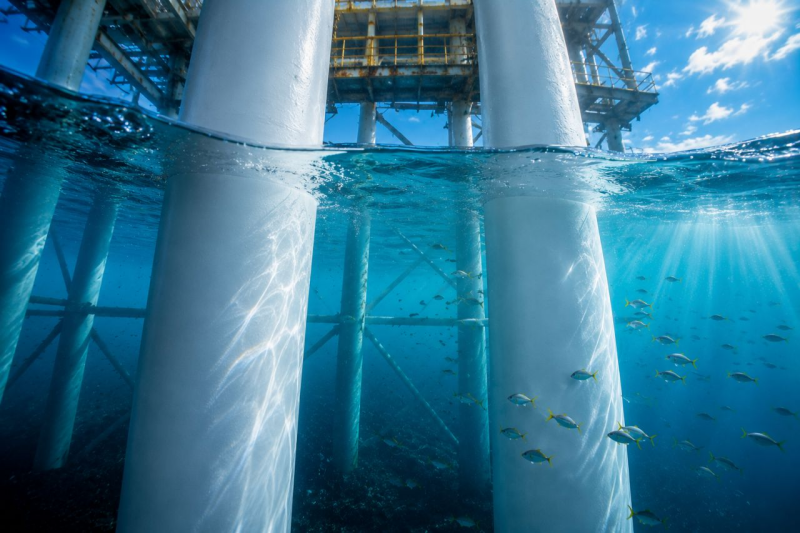
Why Is the Marine Environment So Challenging?
Steel is widely used in marine construction because of its strength and established engineering standards. However, exposure to seawater creates a continuous corrosion challenge.
Salt and moisture accelerate electrochemical corrosion, while protective coatings can deteriorate due to UV exposure, mechanical damage and continuous contact with seawater.
Marine structures may therefore require regular:
● Corrosion inspections
● Surface preparation
● Repainting and recoating
● Component replacement
● Access and maintenance operations
For offshore installations, these activities can be particularly expensive because maintenance personnel and equipment may need to be transported to remote locations.
FRP approaches the problem differently: instead of protecting a metal substrate from corrosion, the composite material itself is inherently resistant to rust and many forms of environmental degradation.
1. Corrosion Resistance
Corrosion resistance is one of the most important advantages of FRP in marine applications.
Conventional steel can experience significant corrosion in severe marine environments, particularly where protective coatings are damaged or degraded.
FRP does not contain metallic components that can undergo conventional rust formation. The combination of glass fiber reinforcement and polymer resin provides strong resistance to seawater, moisture and many corrosive environments.
This makes FRP particularly suitable for:
● Offshore platforms
● Marine walkways
● Coastal infrastructure
● Ship and port facilities
● Aquaculture systems
● Seawater treatment facilities
● Cable management systems
Reducing corrosion can also reduce the need for recurring protective coatings and associated maintenance.
2. Lightweight Construction
FRP can be significantly lighter than equivalent structural steel components, with weight reductions of up to approximately 75%, depending on the design and profile.
Weight is particularly important in offshore engineering.
Every kilogram added to an offshore structure can influence transportation, lifting, installation and structural design. In floating applications, weight can also affect buoyancy and stability calculations.
The lower density of FRP can therefore provide several practical advantages:
● Easier transportation
● Simplified manual handling
● Reduced lifting requirements
● Faster installation
● Lower structural loads
● Potentially reduced support requirements
For projects where access is difficult or installation equipment is limited, these benefits can be especially valuable.
3. Non-Conductive Properties
FRP is inherently electrically insulating compared with conventional metal structures.
This property can be valuable around electrical equipment and marine power infrastructure, where conductive metallic components can introduce additional electrical and galvanic corrosion considerations.
FRP cable trays, platforms, walkways and structural components can therefore be used in applications where electrical insulation is an important design consideration.
The specific electrical performance of an FRP product depends on the resin system, reinforcement and formulation, so project-specific requirements should always be evaluated during design.
4. Non-Magnetic Performance
Another characteristic of FRP is that it is non-magnetic.
This can be advantageous in applications where magnetic interference needs to be minimized, including certain navigation, measurement and monitoring systems.
For specialized marine and offshore installations, using non-magnetic structural and support components can help engineers avoid unnecessary interference with sensitive equipment.
5. Reduced Maintenance Requirements
Maintenance at sea is fundamentally different from maintenance on land.
Access to offshore structures can depend on weather conditions, vessels, cranes and specialized personnel. Even relatively simple maintenance operations can become expensive and operationally disruptive.
FRP's corrosion resistance can significantly reduce the need for conventional corrosion-related maintenance such as repainting and recoating.
Instead of repeatedly restoring a protective coating, engineers can specify a material that is inherently resistant to the marine environment.
This can contribute to:
Lower maintenance requirements → fewer interventions → reduced downtime → lower lifecycle costs.
The actual maintenance requirements will depend on the specific FRP formulation, application and operating environment, but the potential lifecycle advantage is particularly relevant for long-term marine infrastructure.
FRP in Real-World Marine Applications
FRP composites are already being used in a wide range of demanding marine and offshore applications.
Offshore Platforms
FRP can replace conventional metallic components in areas such as walkways, platforms, handrails, cable management and structural support systems.
The combination of corrosion resistance and low weight can help reduce maintenance requirements while simplifying installation.
Cable Management Systems
Offshore electrical and communication infrastructure requires reliable cable support systems that can withstand moisture, salt and demanding environmental conditions.
FRP cable trays and ladder systems provide a corrosion-resistant alternative to conventional metallic cable management.
Marine and Coastal Infrastructure
FRP grating, structural profiles, handrails and access systems can be used in ports, coastal facilities, seawater treatment plants and other infrastructure exposed to marine conditions.
Aquaculture
Aquaculture facilities operate continuously in contact with seawater.
FRP profiles and structural systems can be used for floating frames, platforms and support structures where resistance to moisture and corrosion is particularly important.
Examples of FRP Applications
Several long-term applications demonstrate the potential of FRP in demanding environments.
Offshore platform — Shanghai
FRP components have been used to replace steel in an offshore application, reducing exposure to corrosion and associated maintenance requirements.
Oglaend Industries — Norway
FRP cable management systems have been supplied for long-term applications, with a reported 10-year supply relationship and no documented maintenance interventions during the period referenced.
Oyster farming — Vietnam
FRP raft systems have been introduced as an alternative to traditional wood and metal structures for aquaculture applications, providing a durable solution for continuous seawater exposure.
These examples illustrate the broad range of environments in which composite materials can be considered as an alternative to conventional materials.
Choosing the Right FRP Solution
Not every marine application requires the same FRP formulation.
The appropriate solution depends on factors such as:
● Seawater exposure
● UV exposure
● Mechanical loading
● Temperature
● Chemical exposure
● Required fire performance
● Electrical properties
● Profile dimensions
● Expected service life
Different resin systems and reinforcement configurations can be selected according to the operating environment and technical requirements.
For this reason, customized FRP design is often more appropriate than simply selecting a standard profile.
FRP Solutions for Marine and Offshore Projects
At Nanjing Spare New Materials, we manufacture a wide range of FRP products for demanding industrial and infrastructure applications, including:
● FRP structural profiles
● Cable trays and ladder systems
● Grating and walkways
● Handrails and safety systems
● Access ladders and climbing cages
● Support structures
● Custom FRP components manufactured according to customer drawings
With more than 30 years of composite manufacturing experience, our team can evaluate customer drawings and technical requirements and recommend a suitable FRP solution for the intended operating environment.
Looking Beyond Corrosion
Marine engineering is not simply about finding a material that will not rust.
The complete solution must consider weight, installation, electrical properties, maintenance, durability and lifecycle cost.
FRP combines several of these characteristics in one material system, making it a compelling option for offshore, marine and coastal infrastructure where long-term environmental exposure is a major design consideration.
If you are developing an offshore, marine or aquaculture project, send us your drawings, specifications and application requirements.
Our engineering team can evaluate the project and provide a customized FRP solution and quotation.