

Anti-Corrosion Budgets Keep Rising? A 20-Year Cost Look at FRP Profiles
Rusted railings, re-coated platforms, aging walkways - in chemical plants and ports, anti-corrosion is never a one-off investment but a bill that comes back every year. Rust removal, repainting, parts replacement and line shutdowns, each of them looks small alone, yet once added up, they often exceed the original purchase price, which is why more engineering budgets now put FRP profiles into the calculation.
Three mistakes show up again and again. First, comparing purchase price only: carbon steel looks cheap, yet coating labor and maintenance crews are often left out. Second, ignoring downtime: one half-day shutdown for repair can cost more than the material difference. Third, underestimating replacement cycles: in salty coastal air, ordinary steel parts need major repair in about a decade, while FRP profiles typically last far longer under the same conditions.
Take a 3-meter walkway as an example. Considering spread purchase price, coating work, maintenance and replacement over 20 years, the carbon steel option needs upkeep money almost every year, while FRP profiles are virtually maintenance-free. By typical industry cost levels, the gap usually opens within a few years. Exact figures vary by projects, so SPARE offers free selection support and an initial cost estimate for every inquiry.
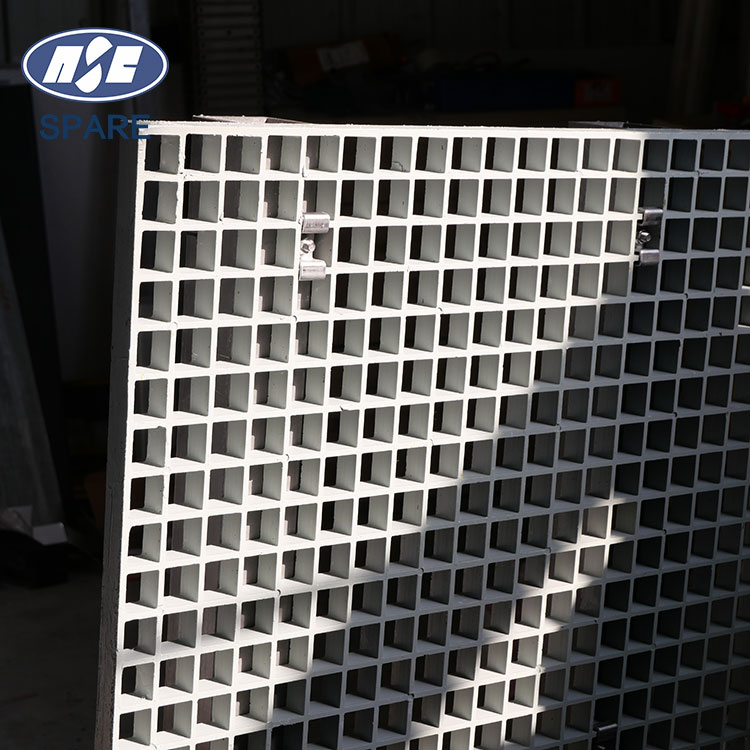
After the math, the product decides. SPARE Composite, a FRP profile specialist, supplies pultruded profiles, FRP grating, FRP pallets, fiberglass tool handles, wood-grain profiles and composite frames for solar panels, with dimensions and colors customized per project. SPARE also took part in drafting national standard GB/T 31539-2015, so the whole process is documented and traceable.
From project experience, four scenarios deserve an FRP evaluation first.
Ÿ Wet, acidic, alkaline or salt-spray environments such as wastewater plants, chemical workshops and coastal facilities
Ÿ Electrical areas where FRP’s insulation matters
Ÿ Weight-sensitive installations where FRP, at about a quarter of steel’s density, cuts labor and lifting cost
Ÿ Low-maintenance projects where FRP needs almost no upkeep in the long run.
FRP is not a universal answer. For extremely heavy loads, long-term temperature near the material’s heat deflection point, or stiffness-critical connections, a structural engineer should verify the design case by case. FRP also costs more upfront than plain carbon steel, so in mild environments with tight budgets, we need to run the numbers first. Stating these boundaries honestly is how SPARE serves its clients.
If your project is struggling with a rising anti-corrosion bill, send the drawings or working conditions to SPARE Composite. The team will provide FRP samples, technical datasheets and an initial cost estimate, and the sales team replies within 24 hours. Do the math first, then choose the material, and the budget is spent wisely.